Honouring The OSAS OG
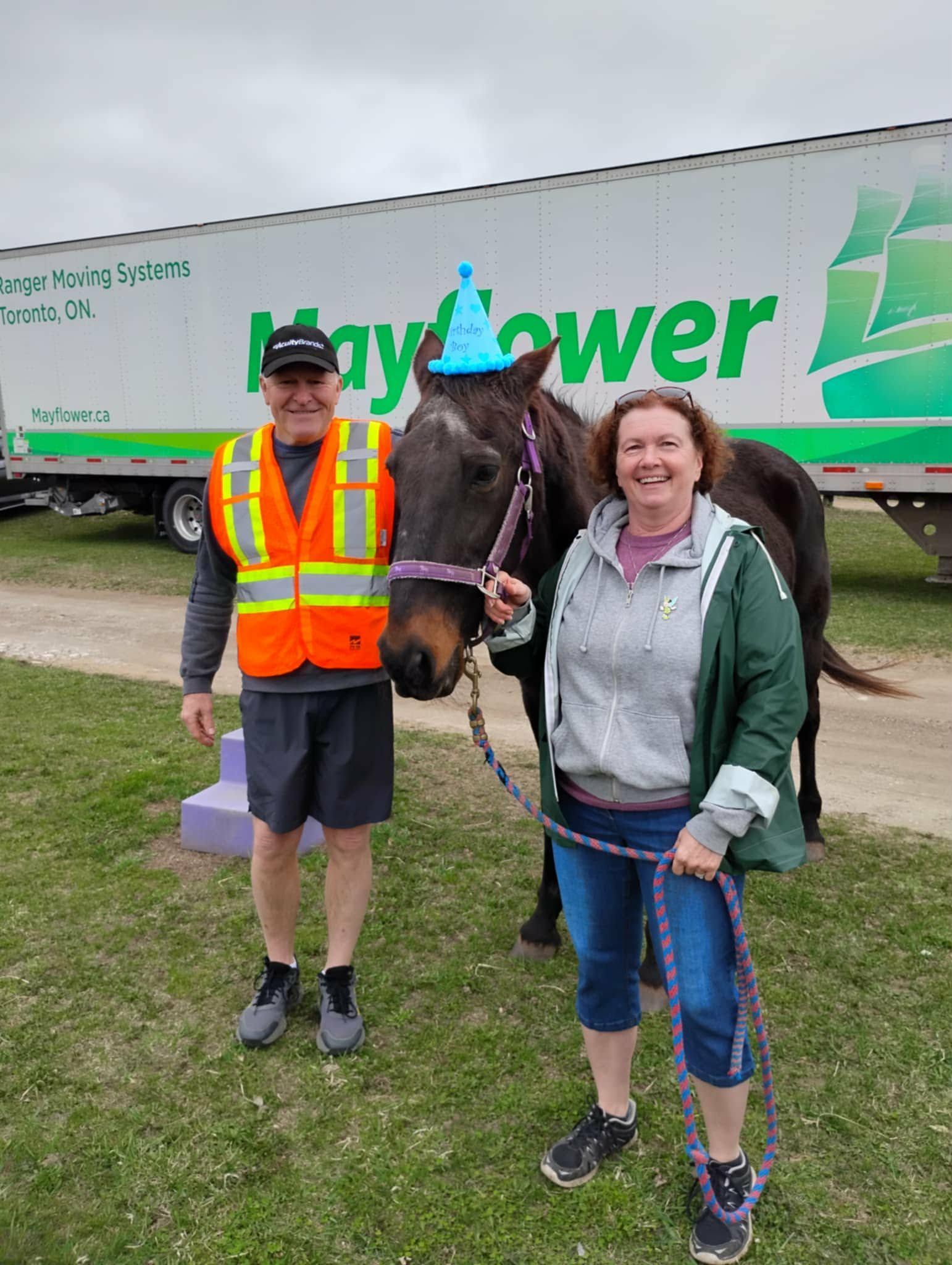
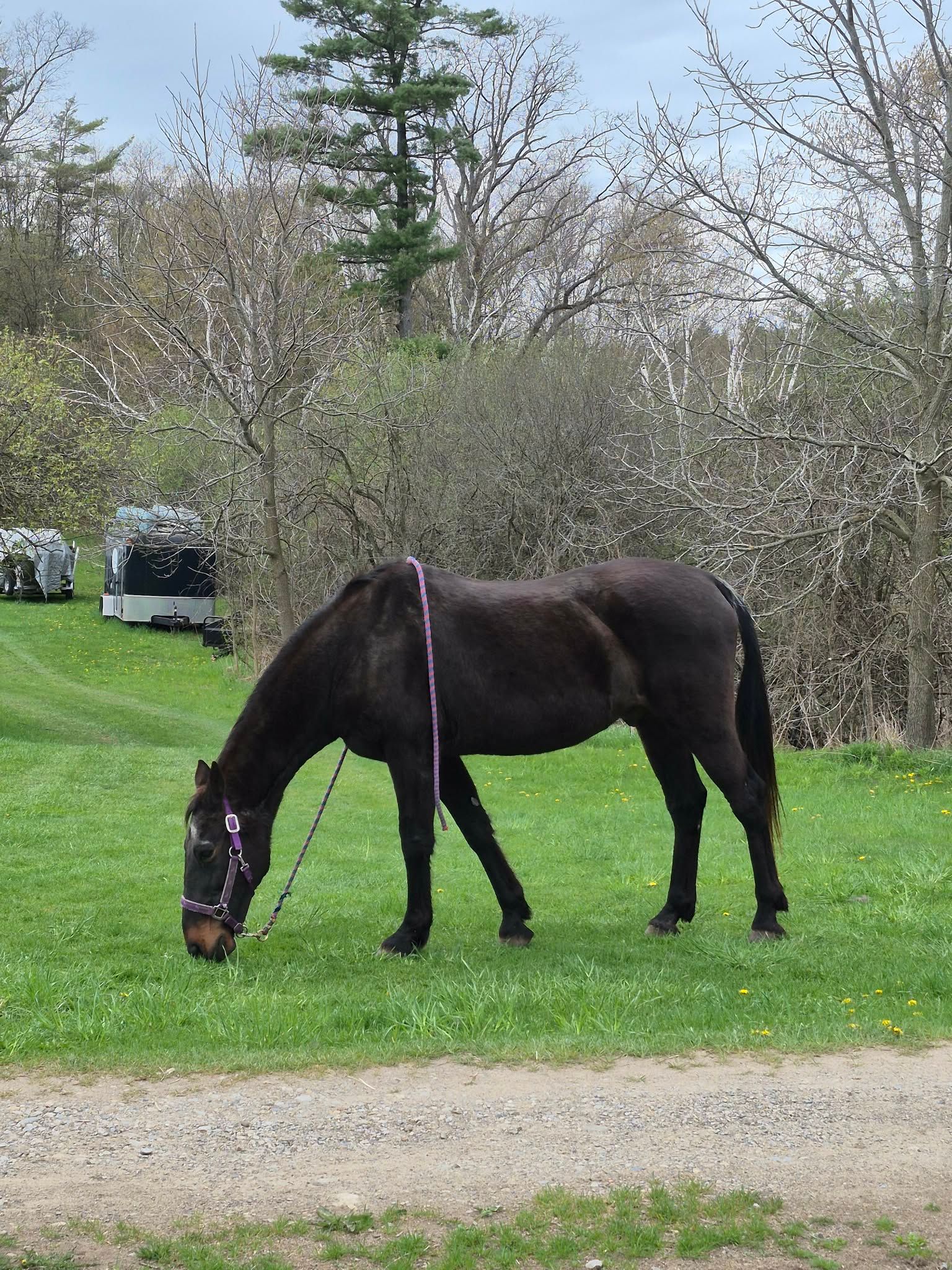


As the Ontario Standardbred Adoption Society celebrates its 30th year in 2026, it seems fitting we recognize the woman who was responsible for its formation three decades ago, Anita TenBruggencate, who is the subject in our latest 30 Years, 30 Stories series.
Anita, now an early childhood educator, worked as a caretaker during the 1990s with trainers like William Wellwood, Rob Fellows and Tom Artandi. It was during her time with the latter and working in Florida she became aware of adoption agencies for horses and was curious to see if one could be formed in Ontario.
“While we were in Florida, I heard about the SRF (Standardbred Retirement Foundation, founded in 1989) and I read up on it and thought ‘why don’t we have one of these in Ontario?’” remembered Anita. “When we got back from Florida, I approached Reed Lawson who was then the General Manager of the Ontario Harness Horse Association (OHHA). As a groom I was a member of OHHA and thought that was the right place to start. Reed was very open to listening to my ideas about an adoption agency and was very gracious and supportive right from the start,” said Anita.
Reed put together a committee with various stakeholders from the industry, including current OSAS director Heather MacKay, then the Managing Editor of Trot Magazine. “That initial committee was very helpful, and we were able to access their contacts and knowledge to continue forward and form an actual board of directors down the road.”
The committee examined the viability of an adoption agency specifically for Standardbred horses in the province. It wasn’t a fast process. Support from all sectors of the industry had to be gained, a board of directors and mandate formed, determination of how the adoption process would work, establishment of guardian and foster farm responsibilities and most importantly, a name. The Ontario Standardbred Adoption Society was agreed upon and the initiative moved forward.
“Reed very generously gave me a place to work in the OHHA offices. He also allowed me to use their mailing list so we could send out a survey to members to see if there was enough interest to go forward. People were really positive about it, so we kept going. At first, I was strictly doing it on a volunteer basis but at one point I believe they paid me, especially once we started doing some fundraising. It’s hard to remember, after all, it’s been 30 years,” laughed Anita.
Some of that fundraising consisted of going to tracks and selling raffle tickets, horse prints that were donated and OHHA swag. “I want to recognize local artist Vicky Lawrence who regularly donated originals, prints and cards for us to sell.”
A major turning point in terms of fundraising came when Steve Condren, one of the top drivers in Canada for many years and now a member of the Canadian Horse Racing Hall of Fame, allowed his name to be associated with a golf tournament, the funds raised going to OSAS.
“When they asked me to be a part of this organization, I thought it was something we needed. Now I can’t see us without it,” said Condren when he reflected on the start of the tournament.
“The golf tournament was a huge step forward. Steve Condren leant his name to it and that was a big deal and improved our visability and fundraising efforts considerably,” explained Anita. The tournament remains to this day one of the most popular and successful fundraising efforts every year.
Once the industry saw the efforts being made by OSAS and the professional manner in which horses were being accepted into the program, adopted and monitored afterwards, funding from purses (less than one per cent) was agreed to by the regulatory body at the time, the Ontario Racing Commission.
Funding from the province continued and was extended in the historic 19 year horse racing agreement signed by the government and Ontario Racing in 2018. That funding also extends to Longrun Thoroughbred Retirement Society, the Thoroughbred counterpart to OSAS which was established a few years after, in 1999.
“While the initial idea for OSAS was mine, it took a lot of work by some very dedicated people to get it off the ground and running. I remember Don McNiven was very passionate about it and gave us the breeders’ perspective. He sat on the board for a few years,” Anita recalls. McNiven, who passed away in 2014, operated Killean Acres with his brother Jack for many years.
“Laura Martin was a great help as well,” continued Anita. “She was one of my biggest supporters and was on the board and served as president for several years. She has a great business sense, and she helped a great deal to apply for and earn charitable status for OSAS which was huge.”
Laura first heard about OSAS through the initial survey Anita sent out as her partner (John Braid) was a Standardbred trainer and therefore a member of OHHA. A rider from the age of three, Martin wasn’t very familiar with the breed but they became her favourite. “They are the best saddle horses, they’re so level headed, they learn so quickly and they’re versatile,” Laura noted in a story in TROT about OSAS a few years after it was formed.
“The women in the OHHA office, Barb (Finlayson) and Yvonne (Smits), were also very helpful. Those first few years OHHA was an enormous help, we used their boardroom for meetings and I worked at their office,” Anita remembered.
“Paula Wellwood (daughter of Anita’s former employer, William, and a very successful trainer herself) was another one who was very supportive and a great resource. I remember Jim Evans (OSAS’s current president), being a wonderful resource. Garry and Anne Phillips were great as well, he did an incredible job organizing the golf tournament every year, that certainly wasn’t something in my wheelhouse.”
Anne, a member of the iconic Armstrong Bros. family, and Garry were hard working advocates for OSAS for many years. Garry actually served for a few years as OSAS’s administrator until his sudden passing in 2009. That’s when current administrator Joanne Colville was brought in to fill that role.
“Joanne does an incredible job, she manages to keep so many balls in the air. I want to applaud her and the current board of directors (Jim Evans, Bill O’Donnell, Kelly Spencer, Ian Fleming and Heather MacKay) for their dedicated service. To the foster farms and volunteers who have kept this wonderful program going over the years, and business like Masterfeeds and Purina and all of the farms and people in the industry that support OSAS, it is so much appreciated,” noted Anita.
Anita served as OSAS’s first program co-ordinator until she elected to stay home with her daughters, Elana and Cara, who are both now in their 20s. Anita continued to volunteer her services for a few years and returned in 2011 as a part time adoptions co-ordinator.
“That was just after my mum died after a long fight with leukemia. I had been her main caregiver, and I was looking for something to focus on. I still had the passion for OSAS, I still have it to this day, but that was a difficult time for the program.
“We were lacking foster homes and there were too many horses for us to successfully accept and rehome, it was very challenging,” said Anita of the time when the slots at racetracks program in Ontario had ended and caused distress across the industry. “I’m very happy to see the stability in the program in the subsequent years and the wonderful work of the current foster farms.”
After a couple of years Anita returned to her main vocation in education, specializing in kindergarten, but she has a strong tie to OSAS to this day through her horse Jacquard.
“In 1999 I had been married for two years and was about to leave OSAS to have my daughter. At that time, we were living on a farm we rented, and Tom Artandi contacted me about a two-year-old by Goalie Jeff named Jacquard. I went to see the horse. He wasn’t gelded and had a recent fracture and so he wasn’t eligible to join OSAS due to those factors.
“He was a beautiful horse. In addition to the fracture, he’d also had recent colic surgery so they decided to quit with him and asked if I could take him. Although he wasn’t eligible to be an OSAS horse at that point, I had empty stalls. Tom gave us hay and grain for a year and paid for him to be gelded,” explained Anita who started riding when she was eight.
“During that year he healed so he went into the program but by that time I was pretty attached to him. That first time I went to see him he was lying down due to the fracture, but he still got up to see me on three legs, it touched my heart. I guess God figured we were meant to be together and an official adoption went through.
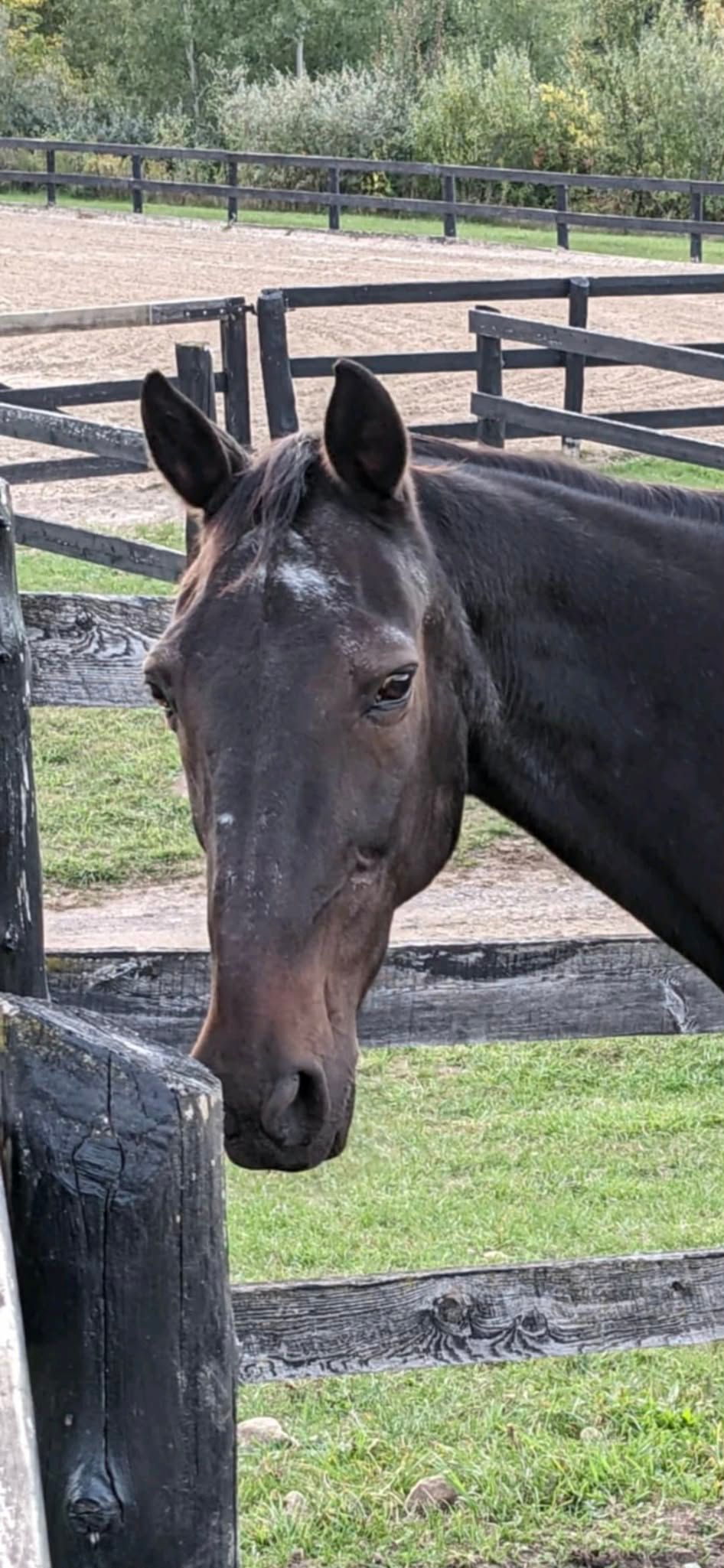
“He’s 31 now and has been an incredible companion for me and saved me a lot of money on counselling. I go out and have my therapy talks with him, we’ve always just clicked. I still ride him, he’s sound and healthy. He has Cushings (disease) and is on the lowest dose. My maiden name is Jacquemart, so that was another sign he was meant to be part of my life.”
Affectionally known as Jack, he has been many folks first exposure to a horse of any kind let alone a Standardbred. “I’ve shared Jack with so many people. For a lot of them it’s their first time seeing a horse and then they get up on his back. He’s so relaxed and calm and that gives me so much pleasure to see how happy it makes them.
“Of course, due to his age I’m getting anxious about the end, I pray for him to pass on his own on a sunny afternoon out in the field, but I know that’s not how it usually happens,” lamented Anita who boards Jack at Sawgrass Valley farm in Puslinch where she visits often and is on weekly night feeding.
“It’s a wonderful farm with cooperative owners and great management,” said Anita who often takes Jack for walks around the property. “He doesn’t need a lead shank; he just follows me around looking for nice grass. It’s like having a big dog.”
Anita still works but on a supply basis instead of full time. “It’s perfect, it lets me pay for my horse but gives me the flexibility with my schedule now which is nice.” It also allows she and her husband, Albert, to make regular trips to Alberta to visit their oldest daughter.
Although she isn’t active in the racing world these days, she still takes a great interest in OSAS and the horses that graduate from the program. “I enjoy reading the stories of the horses that find forever homes and loving families. There are so many of them.”
To think, that as a young caretaker, she came up with the idea to start the program which has now found well over a thousand horses a warm retirement, gives Anita a great deal of satisfaction.
“When you think of how we started, when money was so tight, it was tough. But I never had any doubt and once it started to take off and got supported, it flourished. To see where it is now and all of the people and horses who are benefitting from OSAS, that really warms my heart to think I was a small part of that.”